For most ecommerce teams, the choice between organic and paid traffic isn’t just a marketing debate - it directly impacts revenue, growth pace and how consistently you can drive sales to your website.
In reality, both SEO and PPC are essential parts of ecommerce, but they work very differently. One builds momentum over time, the other delivers results instantly. Understanding how each channel works, what it costs and what it brings long-term helps you make smarter decisions.
So the real question isn’t SEO vs Ads. It’s how each channel fits into your overall growth strategy and how to use them together effectively.
Key takeaways:
- SEO = no cost per click, PPC = you pay for every visit;
- paid traffic brings instant results but stops without budget;
- SEO is a long-term asset, PPC is a continuous expense;
- organic users research more & convert later but consistently.
Understanding SEO the core differences between & paid traffic
If you want predictable growth, you need to understand how these channels really work. SEO and paid traffic aren’t competitors - they play different roles. One builds trust and visibility over time, the other gives you instant reach and control. When you see where each fits, it’s much easier to allocate budget and avoid dependence on one source.
Organic search vs paid advertising: how each traffic source works
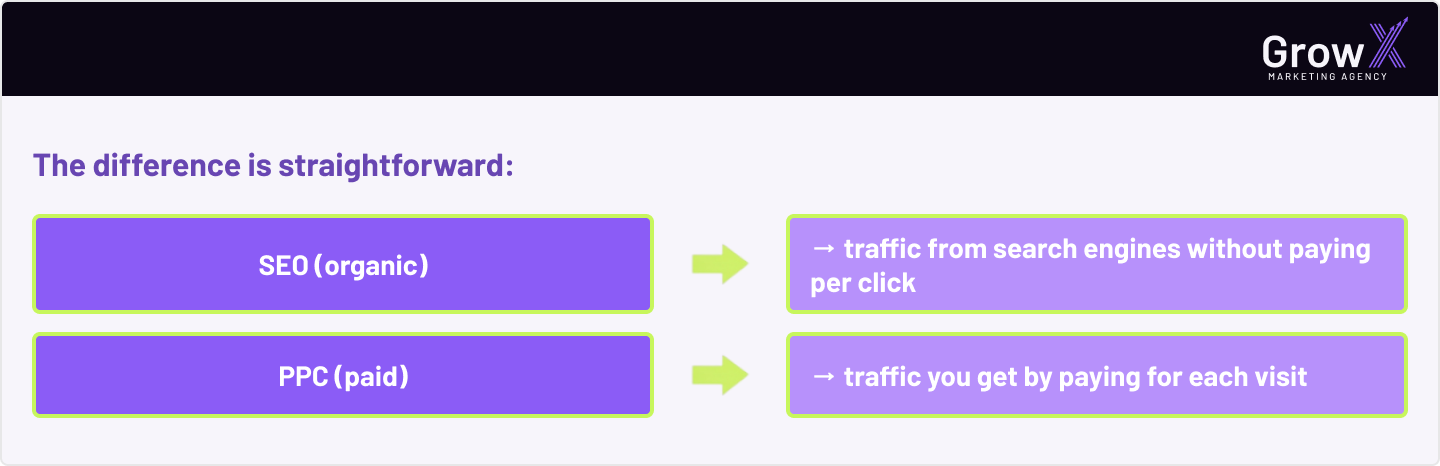
Organic traffic relies on relevant keywords, strong content and authority. Paid traffic depends on budget, targeting and campaign setup.
This shapes the whole logic behind organic vs paid traffic conversion rate. SEO grows visibility over time, while ads bring immediate exposure.
Impact on website performance: traffic quality & quantity
Special traffic grows slower, but it’s more stable and usually has higher intent. Paid traffic can scale fast, but it stops as soon as you pause.
In most ecommerce cases:
SEO = steady baseline traffic;
PPC = flexible growth spikes.
That’s why businesses use SEO for stability and ads for faster scaling.
Conversion rate differences between SEO & paid ads
The gap in organic vs paid traffic conversion rate often comes down to user behavior.
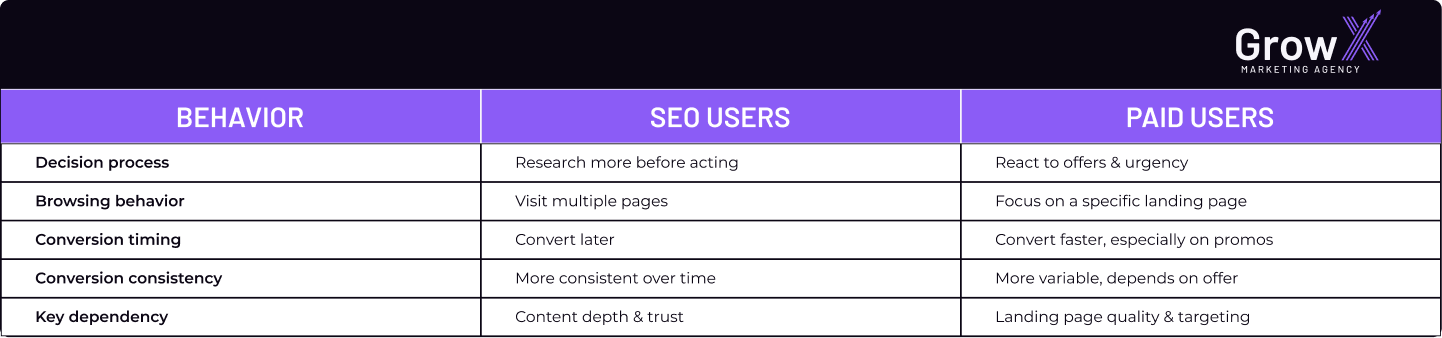
Both channels can boost results, but they work at different stages of the funnel.
Cost & investment analysis
Choosing a channel is also about understanding how money works in each model. SEO and paid traffic follow completely different economics. One builds value over time, the other delivers immediate results but requires constant input. This directly impacts ROI and scalability.
Cost structure: SEO vs PPC campaigns
The financial logic is simple:
SEO = long-term invest in content, structure & authority;
PPC = continuous spending on clicks and visibility.
With ads, every visit has a cost. With SEO, traffic builds up and turns into a long-term asset.
Budget requirements & profitability per visitor
SEO often has a lower long-term cost per visitor once rankings stabilize. PPC provides predictable acquisition cost but requires ongoing spending.
This makes it more scalable over time, while ads scale instantly but linearly with budget.
Why requires patience while paid ads need ongoing investment
SEO takes time because search engines evaluate authority and relevance gradually. Ads require constant funding to maintain visibility.
So:
- SEO = delayed but compounding returns;
- Ads = immediate but non-compounding returns.
Long-term vs short-term performance
One of the biggest differences between SEO and paid traffic is timing. These channels operate on completely different horizons. SEO builds momentum and delivers results over time, while paid campaigns generate immediate traffic but require constant input.
Sustainable traffic & long-term revenue from organic
SEO traffic becomes a long-term asset. Once pages rank, they can continuously drive sales to your website without additional per-click costs.
This is where it becomes a core primary channel for mature ecommerce businesses.
Immediate results & traffic from paid campaigns
Paid ads are ideal when you need fast traction. They can quickly boost visibility, generate clicks and validate offers.
This makes PPC especially useful for:
- product launches;
- seasonal campaigns;
- testing new markets.
Which channel delivers more qualified visitors for your niche
In many cases, it brings more qualified traffic because users search with intent. Paid traffic can be highly effective, but it depends heavily on targeting quality and offering clarity.
Strategic advantages of each channel
Each channel has its strengths and understanding them helps you use both more effectively. SEO and paid traffic aren’t interchangeable - they solve different tasks. The key is knowing when to rely on one and when to combine them for the best overall result.
Benefits of organic for visibility, credibility & ranking
SEO builds long-term visibility and trust. It strengthens your position in search and supports sustainable growth.
With strong :
- traffic continues without ongoing ad spend;
- rankings compound over time;
- brand credibility increases.
Explore more about best SEO ecommerce strategies that support long-term visibility.
Advantages of paid ads for targeting, speed & flexibility
Paid ads provide:
- instant traffic;
- precise targeting;
- flexible budget control.
They are highly effective when you need to quickly boost awareness or generate short-term sales.
Learn more about paid social media strategies and scaling approaches.
When to use one channel over the other based on business type
The right choice isn’t about preference - it’s about where your business is right now and what you’re trying to achieve.
If you’re just launching an ecommerce store, paid traffic is the fastest way to get visibility and see if your offer actually works.
If your brand is already established, it becomes a smarter bet. It builds long-term growth and helps you rely less on ad spend.
And if you’re in a competitive niche, one channel won’t be enough. Combining both gives you stability from and scale from ads, so you’re not dependent on a single source.
Combining & paid traffic for maximum impact
In reality, the strongest results don’t come from choosing between channels. They come from building a system where SEO and paid traffic support each other. Instead of thinking in terms of SEO vs Ads, it’s more effective to see how both can work together across the full customer journey.
Creating a balanced strategy to leverage both channels
The most effective strategy is not SEO vs Ads, but this thing working together.
SEO builds a long-term foundation, while ads deliver immediate reach. Together they boost full-funnel performance.
Keyword optimization for organic vs campaign setup for paid traffics
SEO focuses on long-term relevant keywords strategy and content structure. PPC focuses on campaign-level targeting and bidding.
Both rely on analytics to refine performance and improve ROI.
Working with experts vs managing your own paid campaigns
SEO requires technical expertise, content strategy and long-term planning. PPC requires constant testing and optimization.
For deeper insights, explore a news SEO blog to understand evolving strategies in both channels.
You can also review benefits of paid media to better understand performance trade-offs.

QUESTIONS &ANSWERS
It really depends on where your business is now. If you’re just starting, paid traffic helps you get quick traction and test demand. If you’re more established, SEO gives you stability and long-term growth.
Yes - and even better when used together. SEO brings consistent, high-intent traffic, while paid ads help you scale faster and capture demand in the moment. Combined, they create more opportunities to grow revenue.
There’s no single winner. SEO works for long-term growth, PPC works for speed. The strongest strategy is using both, so you’re not relying on just one channel.