How to choose business blog topics that can rank & drive traffic
Choosing the right blog topic isn’t about copying competitors - it’s about building authority that supports real business goals and drives traffic.
AI tools changed professional blog writing by making production faster and easier. Businesses now use AI for blog creation, scaling and publishing content much more efficiently.
However, the real debate around AI vs human writing is about long-term quality, trust and authority. AI can create content quickly, but human expertise still delivers stronger strategy, originality and brand positioning.
Key insights:
AI has made blog writing faster and easier to scale, allowing tools like ChatGPT to generate outlines and drafts in minutes. Businesses now use it to speed up content creation and automate routine work. However, AI-generated content vs human expertise remains debated, as writers still provide originality, strategy and real experience that AI cannot fully replicate.
AI simplified repetitive tasks in writing. Businesses now use AI for:
This allows teams to publish more content in less time and scale operations faster.
AI performs well when businesses need volume. It helps create content quickly and supports SEO scaling across large websites.
For example, AI can assist with:
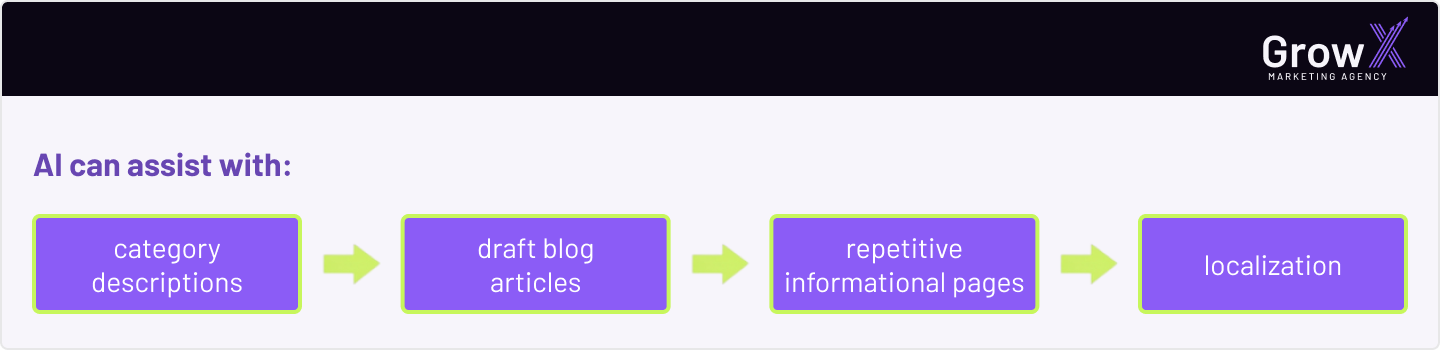
This is why many brands use AI as part of their workflow.
The main advantage is efficiency. AI reduces production time and helps marketing teams move faster.
Businesses often use AI to:
You can explore professional approaches to scalable content through content blog writing and broader create marketing content solutions.
Despite the growth of AI, human expertise still leads in strategic and authority-driven content. AI can generate text fast, but it mainly works with patterns and existing data.
Writers better understand business context, audience psychology and brand positioning. They adapt tone, explain complex ideas clearly and create content that feels authentic.
This matters most in professional blog writing, where trust and credibility influence results. Humans bring storytelling, emotional intelligence and unique insights that AI cannot fully replicate or automate.
AI cannot replicate real experience, personal insights or emotional nuance. Humans bring context, opinion and credibility that algorithms still struggle to reproduce.
This is especially important in industries where trust matters. Readers can often feel when content lacks genuine expertise or authentic perspective.
AI is strong at summarizing information, but weak at positioning brands strategically.
Human writers have the ability to:
Strong content is not only about keywords. It is about connection.
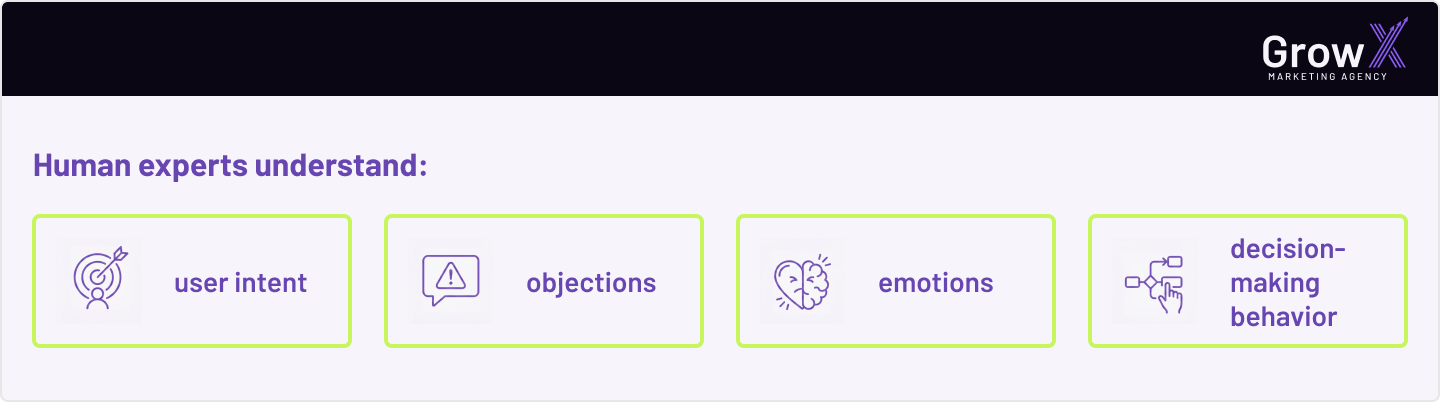
This creates stronger audience trust and a more lasting impact than purely automated writing.
The AI vs human writing debate is about more than speed. It is about quality, trust and long-term value.
AI helps scale writing and automate routine tasks, but ai-generation vs human expertise differs when originality and strategy matter. Writers better understand audience psychology, brand positioning and emotional communication.
That is why the strongest strategies combine AI efficiency with human expertise and editorial control.
AI can generate incorrect information or overly generic conclusions. Without editing, this creates SEO and reputation risks.
AI-generated content vs human expertise differs most in:
Human oversight is still essential for high-quality publishing content.
AI can imitate structure, but it still struggles with originality and emotional storytelling.
Humans bring:
This is where copywriting and expert-led content still outperform automation.
AI-generated articles may rank temporarily, especially for low-competition queries. However, long-term SEO usually depends on expertise, originality and high quality.
Google’s algorithms increasingly prioritize:
Purely templated AI articles may struggle as search quality systems evolve.

AI is powerful, but overusing it creates risks. Automated articles often become repetitive, generic and difficult to differentiate from competitors.
AI-generation vs human expertise becomes obvious when content lacks originality, real experience and strategic thinking. This can weaken trust and brand authority.
There are also SEO risks. AI cannot always verify facts or context correctly, so publishing content without human editing may reduce long-term performance.
The internet is already flooded with similar AI-generated articles. As more companies use the same tools, content becomes repetitive and low-value. This weakens differentiation and reduces authority.

AI often creates “safe” content without strong positioning, which can make brands sound generic over time.
One of the biggest issues with AI-generation vs human expertise is repetitive tone and structure. Writers better adapt messaging, express brand values and create a recognizable voice.
Strong brands need original communication, not standardized text patterns repeated across the internet.
AI can confidently generate inaccurate information. Without editing, these errors may hurt trust, SEO and reputation. This is why expert review remains critical in professional writing workflows.
The future of writing is not AI replacing people. It is a hybrid model where AI supports speed and automation, while humans bring strategy, expertise and originality.
Businesses can now scale production faster, but writers still create stronger trust, positioning and emotional connection. The best results come from combining both approaches.
Strong content teams use AI to speed up research, outlines and repetitive tasks. But strategy, originality and brand voice still depend on human expertise. The best results come when AI supports the workflow while people control the creative and strategic direction.

An effective workflow usually looks like this:
This creates scalable but high-quality content.
Authority cannot be fully automated. Brands that want stronger SEO, trust and long-term differentiation still need human expertise, strategy and original thinking.
AI can support production, but humans create unique positioning, real insights and meaningful communication that builds credibility over time. If you need strategic guidance, you can always need marketing advice.

AI can imitate human tone, but experienced readers often notice repetitive phrasing, generic structure and lack of real perspective.
AI content often feels overly neutral, repetitive or predictable. Human writing usually includes stronger opinions, deeper context and authentic experience.
Not always. AI can support SEO workflows, but relying entirely on automated content may create quality and originality risks over time.