Google Ads account structure: best practices & complete guide
A properly built Google Ads account is the foundation of profitable paid traffic. Many businesses focus on ads and bids, but ignore structure.
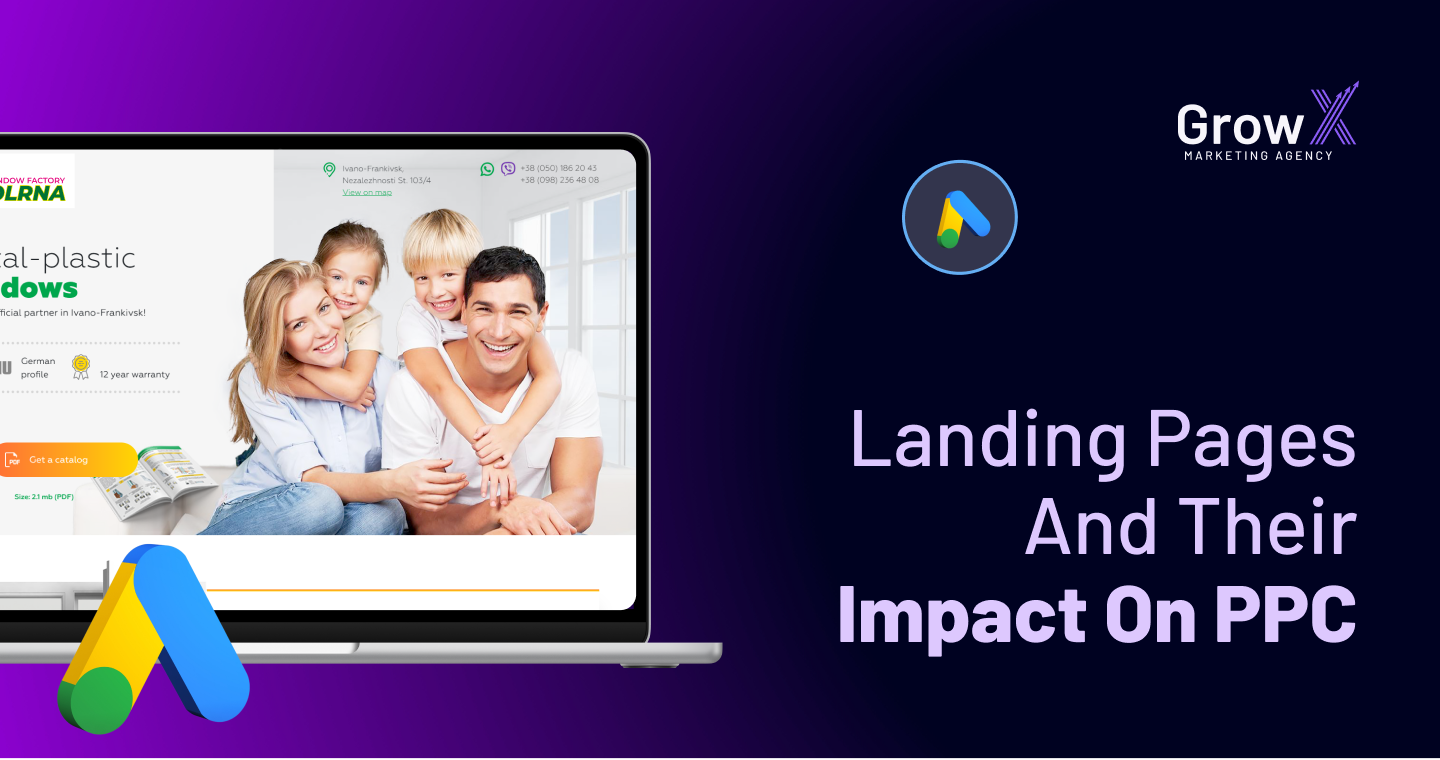
A PPC landing page is where users arrive after clicking a paid ad, and it determines whether traffic turns into conversions such as leads or sales.
Businesses investing in broader marketing services often discover that improving landing pages delivers faster results than increasing ad spend alone.
Key insights:
A landing page is the final stage of the PPC funnel and a major factor in campaign success. While ads generate clicks, the landing page determines whether users convert.
Its role is to focus visitors on a single action, reinforce ad relevance and minimize distractions.
Even well-targeted PPC campaigns can underperform if the page is weak, affecting conversions, acquisition costs and return on ad spend.
When a user clicks an ad, they already have clear expectations and the landing page must immediately confirm they are in the right place.
If the page fails to deliver the promised information quickly, users often leave, creating friction and reducing campaign efficiency.
A dedicated PPC landing page is built around a single offer and conversion goal, with minimal distractions and a focused structure designed to guide users toward action.
Visitors often make decisions within seconds.
An effective landing page clearly communicates:
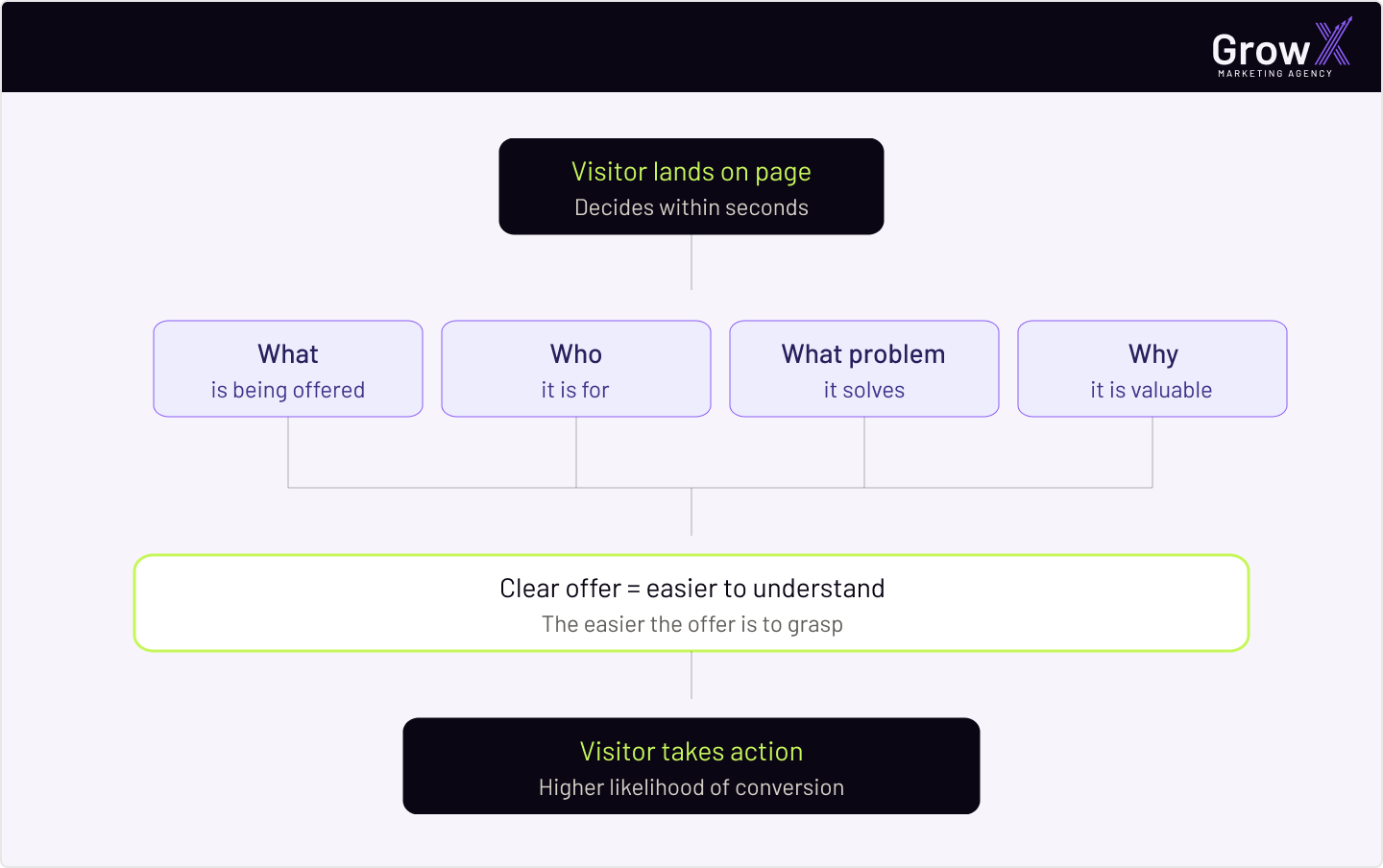
The easier it is for users to understand the offer, the more likely they are to take a specific action.
PPC profitability depends on more than traffic volume. A strong page for PPC can increase conversions without raising ad spend, while a weak page can waste traffic and increase costs.
That’s why many companies treat landing page optimization as a key part of their digital marketing solutions to improve overall campaign performance.
Landing pages directly impact PPC success. While ads drive traffic, this page determines whether visitors convert.
A strong page can improve conversion rates, lower CPA, increase quality score and boost ROAS, while a weak experience often leads to higher bounce rates and wasted budget.
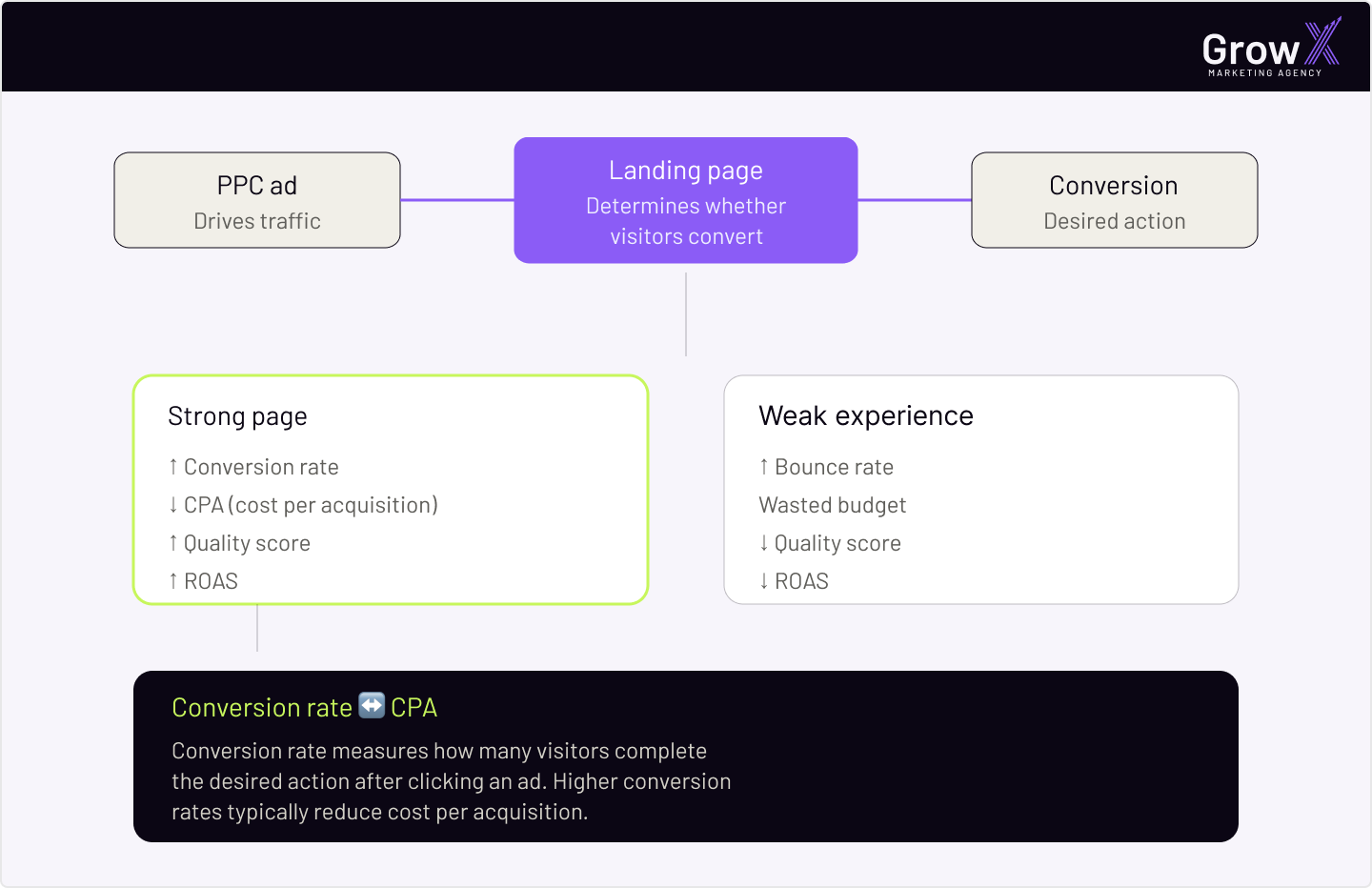
Conversion rate measures how many visitors complete the desired action after clicking an ad. Higher conversion rates typically reduce cost per acquisition because more value is generated from the same advertising spend.
Platforms such as Google Ads evaluate both ad and theme page quality.
Landing page experience is influenced by:
Better relevance and quality often contribute to stronger quality scores, which can improve campaign efficiency.
Users click ads because they expect a specific solution. When ad messaging and page content align perfectly, visitors feel confident that they’re in the right place. This increases trust and improves click-to-conversion performance.
High-performing PPC landing pages combine a clear value proposition, strong ad relevance and a focused conversion goal.
Other key factors include:
Together, these elements reduce friction and help turn paid traffic into conversions.
Message match refers to how closely the page reflects the promise made in the ad. The headline, offer, visuals and value proposition should reinforce the same message users saw before clicking. Strong message consistency reduces confusion and improves conversion performance.
A high-converting PPC landing page should be simple, focused and easy to navigate, helping users quickly understand the offer and take action.
Best practices include:
When aligned, these elements reduce friction, improve usability and increase conversions.
Trust plays a major role in conversion decisions.
Common trust signals include:
These elements reduce perceived risk and help users feel comfortable taking action.
Many PPC campaigns underperform when pages fail to meet user expectations, even with high-quality traffic.
A common issue is mismatch between ad message and page content, leading to higher bounce rates and lost conversions.
Other problems include:
A lack of trust signals also lowers confidence, and in most cases, poor PPC results come from landing page friction rather than ads.
A common issue occurs when the landing page is not aligned with ad intent. If the ad promises something specific but the page delivers something different, users often leave immediately.
This happens when there is a gap between user expectations and page content, such as showing general information instead of the expected offer.
Since PPC users arrive with clear intent, they expect immediate relevance. When this is missing, trust drops and conversions decrease, while campaign costs may increase due to lower quality scores.
Strong PPC landing pages keep consistent messaging between ads and page content.

Page speed remains a major conversion factor.
Slow pages negatively affect:
Since most PPC traffic now comes from mobile devices, responsive design and fast loading times are essential.
A strong call-to-action helps users understand what to do next. When CTAs are unclear, poorly placed or competing with other goals, users often hesitate or leave.
In PPC landing pages, the CTA should focus on a single action and reduce uncertainty. Too many options lower conversion rates.
Simple, clear and visible CTAs reduce friction and improve conversions.
Optimization is an ongoing process, not a one-time task. Effective PPC landing pages are continuously improved based on user behavior and data.
Key strategies include testing headlines, layouts, CTAs and messaging to identify what drives the best results. Even small changes can have a strong impact.
Personalization helps match user intent and audience segments, increasing relevance and engagement.
By analyzing behavior and drop-off points, marketers reduce friction and improve performance over time.
Different audiences respond to different messages.
Many advertisers create multiple versions of a dedicated PPC landing page tailored to specific:
Personalization often improves relevance and conversion performance.
Effective PPC teams treat pages as a continuous testing environment, not a fixed asset. Ongoing experiments help identify what drives conversions.
Consistent improvements across elements can lead to significant gains in conversion rates and PPC efficiency.
Landing page performance should be evaluated across the full PPC funnel.
Key metrics include:
Each click should be measured based on business outcomes, not just traffic volume.
Businesses running PPC alongside paid social media often see better results when landing page messaging is consistent across all traffic sources.
If you are planning a PPC campaign, you can submit a request for a quote to get a detailed page review.

This is the page users reach after clicking an ad, designed to drive a specific action such as a purchase, lead or registration.
A good PPC landing page includes strong message match, clear value, fast loading, mobile optimization, trust signals and a focused CTA, with minimal distractions.