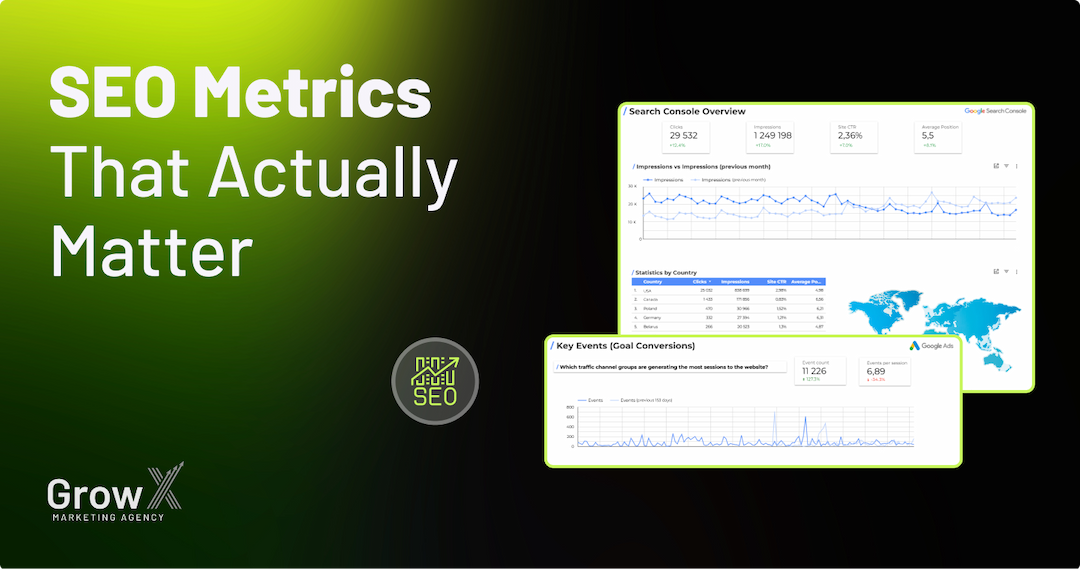
SEO Metrics That Actually Matter (and What Most Reports Completely Miss)
Most SEO reports look impressive but don’t help leaders make decisions. They list rankings, sessions and charts without explaining what actually drives revenue.
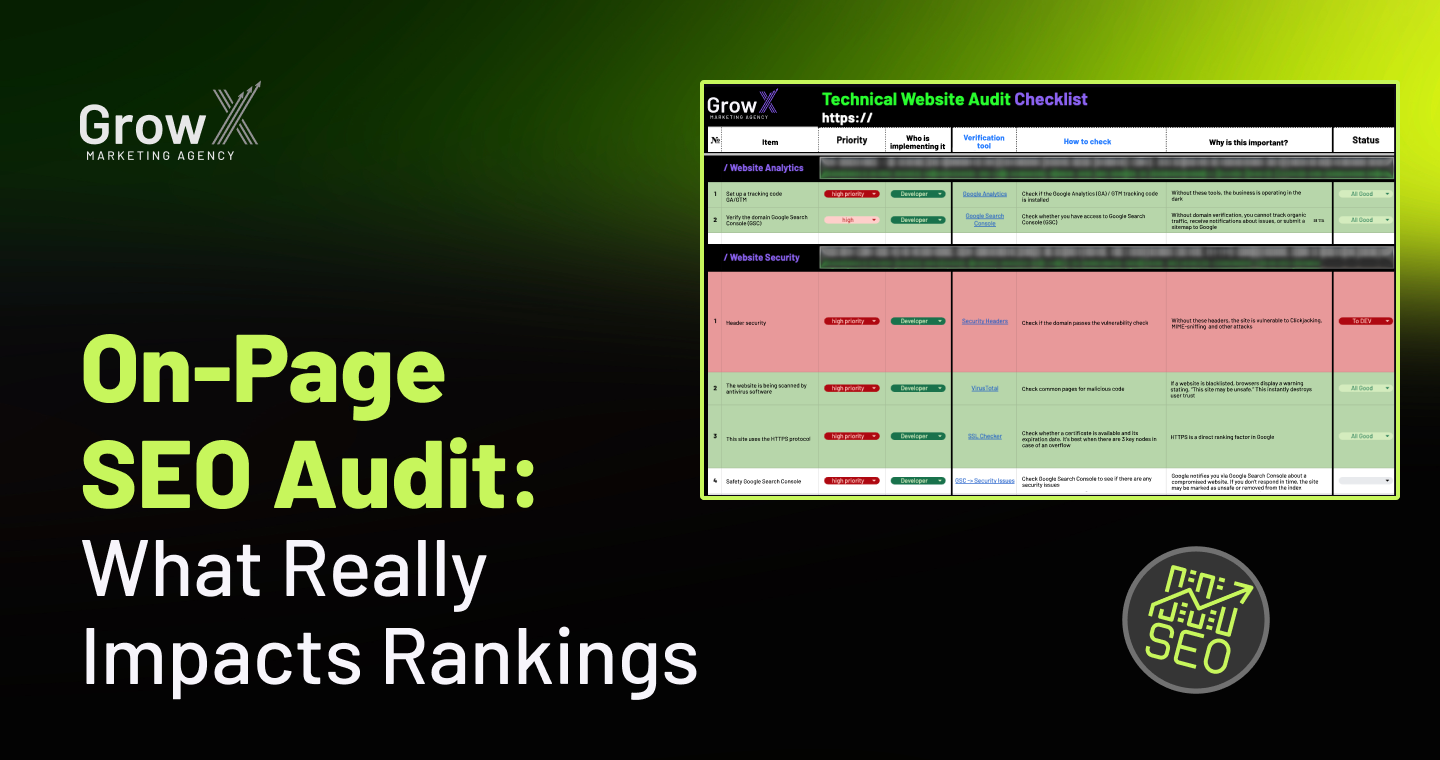
An on-page audit goes beyond checking titles, headings or basic elements. Modern SEO ranking factors focus more on content relevance, structure, intent matching and overall page quality.
Many websites lose visibility not due to missing tags, but because of deeper on-page SEO issues like weak content depth, duplication or poor topical coverage. A proper audit helps identify what limits performance and what can realistically improve rankings.
Key insights:
If you're facing persistent ranking issues or simply need marketing advice, it's important to look beyond technical checklists and evaluate how content, search intent and topical authority work together to influence performance.
An on-page SEO audit evaluates how well a page is understood, interpreted and ranked by search systems. It goes far beyond a simple checklist of metadata or keyword placement.
Google no longer relies only on technical signals. It analyzes whether a page is useful, complete and aligned with intent. Even a perfectly optimized on page structure cannot compensate for weak content.
A version of the page with strong structure but poor relevance may still underperform compared to a less optimized but more valuable competitor page.
Not all on-page SEO issues affect performance equally. Some are surface-level, while others directly limit visibility:
True bottlenecks usually come from relevance and content depth, not just technical formatting.
If intent is wrong, even strong optimization cannot help. Search engines prioritize content that matches what users expect when they enter a query.
That’s why content must align with search purpose. Informational queries require educational content, while product-related searches work better with comparisons, reviews or category pages.
If you need a tailored estimate or strategy for your project, you can submit a quote request to evaluate the best approach for improving visibility and performance.
A common issue is when a page targets a keyword but does not answer what users actually want. This creates a mismatch between expectation and content delivery. When users leave quickly, Google interprets it as a relevance problem, reducing visibility and limiting improved rankings potential.
A strong on-page SEO audit checks whether a page fully covers what users expect to learn. This includes subtopics, supporting concepts, common questions and overall content depth.
The goal is comprehensive coverage instead of fragmented information. Pages that explore a topic from multiple angles better satisfy intent and demonstrate expertise.
Search engines also evaluate semantic relevance, meaning how well content connects related ideas beyond exact keyword usage.
Content gaps are one of the biggest hidden issues in SEO. Pages often fail because they miss important subtopics or fail to match competitors.
Auditors compare:
This reveals missing keyword clusters and weak semantic coverage.
Some on-page SEO factors still play a direct technical and behavioral role in rankings. These elements help search engines understand page content while also influencing how users interact with search results and the website itself.
When properly optimized, they improve content clarity, enhance user experience and make it easier for search engines to crawl and interpret a page.
Title optimization remains one of the strongest signals.
A strong title must reflect:
Meta descriptions do not directly affect ranking but influence CTR, which indirectly affects performance. A well-written keyword-optimized title can significantly improve rankings over time through better engagement.
Internal linking is essential for distributing relevance across pages.
Using relevant internal links helps:
Anchor text also reinforces semantic meaning and supports keyword relevance.
Search engines use structure to understand meaning. Clear headings, logical hierarchy and proper formatting help Google interpret the page correctly. Poor structure weakens understanding, even if content is strong.

Modern audits focus heavily on content quality rather than just technical structure. Search engines increasingly prioritize content that is accurate, helpful and genuinely valuable to users.
During an SEO audit, content is evaluated for factors:
Auditors also look for outdated information, thin content, duplication issues and gaps that may prevent a page from fully meeting user expectations.
Google can reduce visibility for:
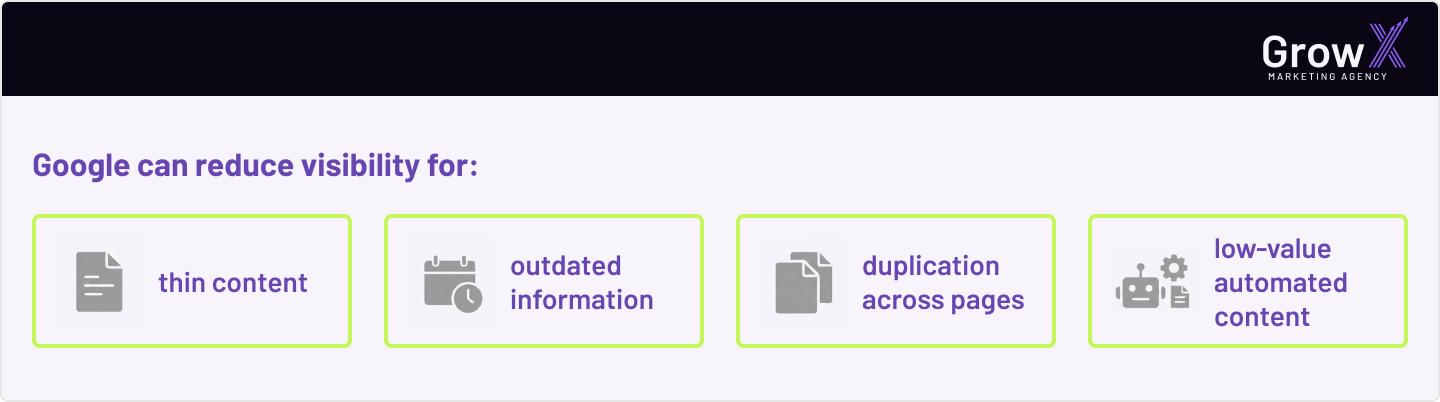
A strong SEO audit identifies these issues early. Even if a page is technically optimized, it may fail to rank if content quality is low.
E-E-A-T signals help determine trust and credibility. Pages with weak authority often underperform even when optimized.
Strong content demonstrates:
Not all issues have the same impact, so prioritization is essential. The most important fixes are those affecting crawling, indexing, user experience and content relevance.
Priority should go to issues like duplication, weak internal linking, intent mismatch or missing metadata before smaller optimizations like minor keyword adjustments.
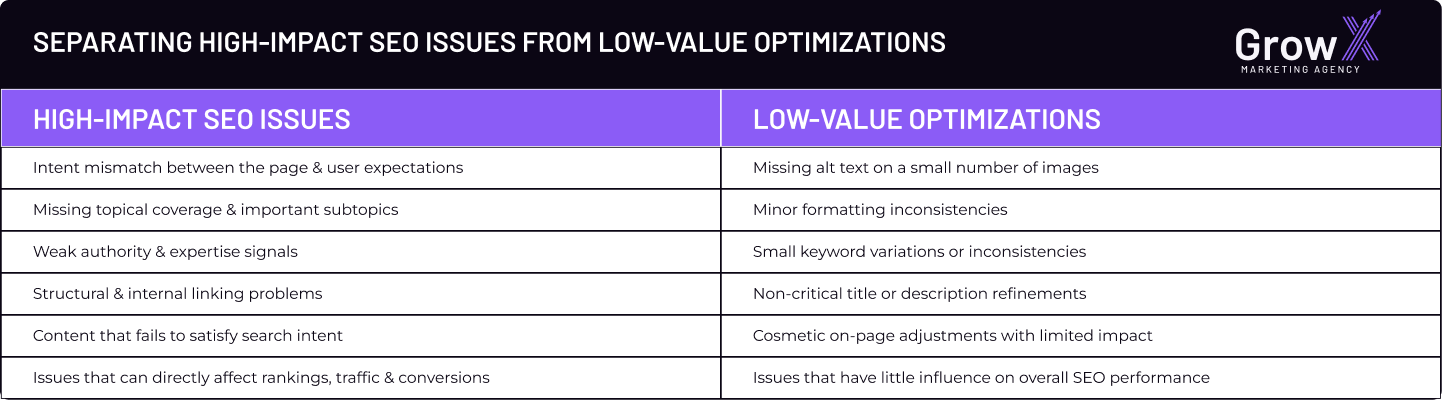
A successful on-page SEO audit prioritizes problems that affect relevance, authority and user intent before addressing minor optimization details.
After implementing SEO updates, it is important to monitor performance using tools such as Google Search Console and crawl analysis platforms. Changes in rankings, click-through rates, index coverage and user engagement help determine whether optimizations are producing meaningful results.
In most cases, SEO gains appear gradually as Google re-evaluates content, structure and relevance, rather than through immediate ranking increases.
Many teams focus too much on surface-level signals instead of deeper problems. The real issue is often not missing metadata, but weak relevance or poor content depth.
A page may look optimized but still fail because it:
Even strong optimization cannot fix a weak foundation.
If you want to check SEO professionally, explore our SEO experts blog for advanced strategies and updates.

Page rank is influenced by relevance, content quality, internal linking, authority signals, page structure and user engagement. Technical optimization alone is not enough.
The most important factors include search intent alignment, content depth, topical authority, internal linking and overall page quality.