





SEO Metrics That Actually Matter (and What Most Reports Completely Miss)
- 03.03.2026
- 3 views
- 7 min
- Why Most SEO Reports Don’t Help (and what to do instead)
- The 4 Visibility Metrics That Show Real SEO Growth (GSC)
- The 3 Traffic Quality Metrics That Separate Good SEO From “Just Traffic” (GA4)
- The 2 Business Metrics That Justify SEO Budget
- The 2 Metrics That Tell You What to Fix Next
- Why We Track Everything in Looker Studio (Dashboard Example)
- Want This Dashboard? Here’s How Grow X Helps.
- The Executive Summary

Key Takeaways:
- track clicks, impressions, CTR, engaged sessions, new vs returning users and keyword growth;
- business metrics justify SEO spend – conversions, leads & revenue from organic search prove ROI;
- actionable insights guide optimization;
- сentral dashboards make analysis easy – combining GA4 & GSC in Looker Studio with filters turns data into clear decisions.
Most SEO reports look impressive but don’t help leaders make decisions. They list rankings, sessions and charts without explaining what actually drives revenue. For results-driven optimization, consider partnering with professional SEO services that focus on metrics that truly impact growth.
Why most SEO reports don’t help and what to do instead
Many reports rely on traditional SEO metrics that look good but lack context. Charts of sessions, rankings and impressions often don’t show real business impact.
The problem isn’t data - it’s interpretation. Reports should connect visibility, traffic quality and conversions, turning numbers into actionable insights rather than just summaries of activity.
The #1 mistake: tracking numbers without context
Numbers without context create false confidence. Rankings may improve, yet revenue stays flat. Traffic may increase, but engagement drops.
For example, a site may rank higher for broad keywords found during keyword research, but those queries don’t convert.
Without connecting rankings to conversions, you can’t measure real performance or understand how changes impact your SEO.
The 3 questions every SEO report must answer:
- Is visibility growing in search results?
- Is the traffic high quality?
- Is SEO generating revenue or qualified leads?
If a report cannot clearly answer these, it does not include the right metrics.
The 4 visibility metrics that show real SEO growth (GSC)
These SEO analytics metrics reveal what Google is actually doing with your site. Unlike basic traffic data, they show how your pages are ranked, tested and interpreted in search results.
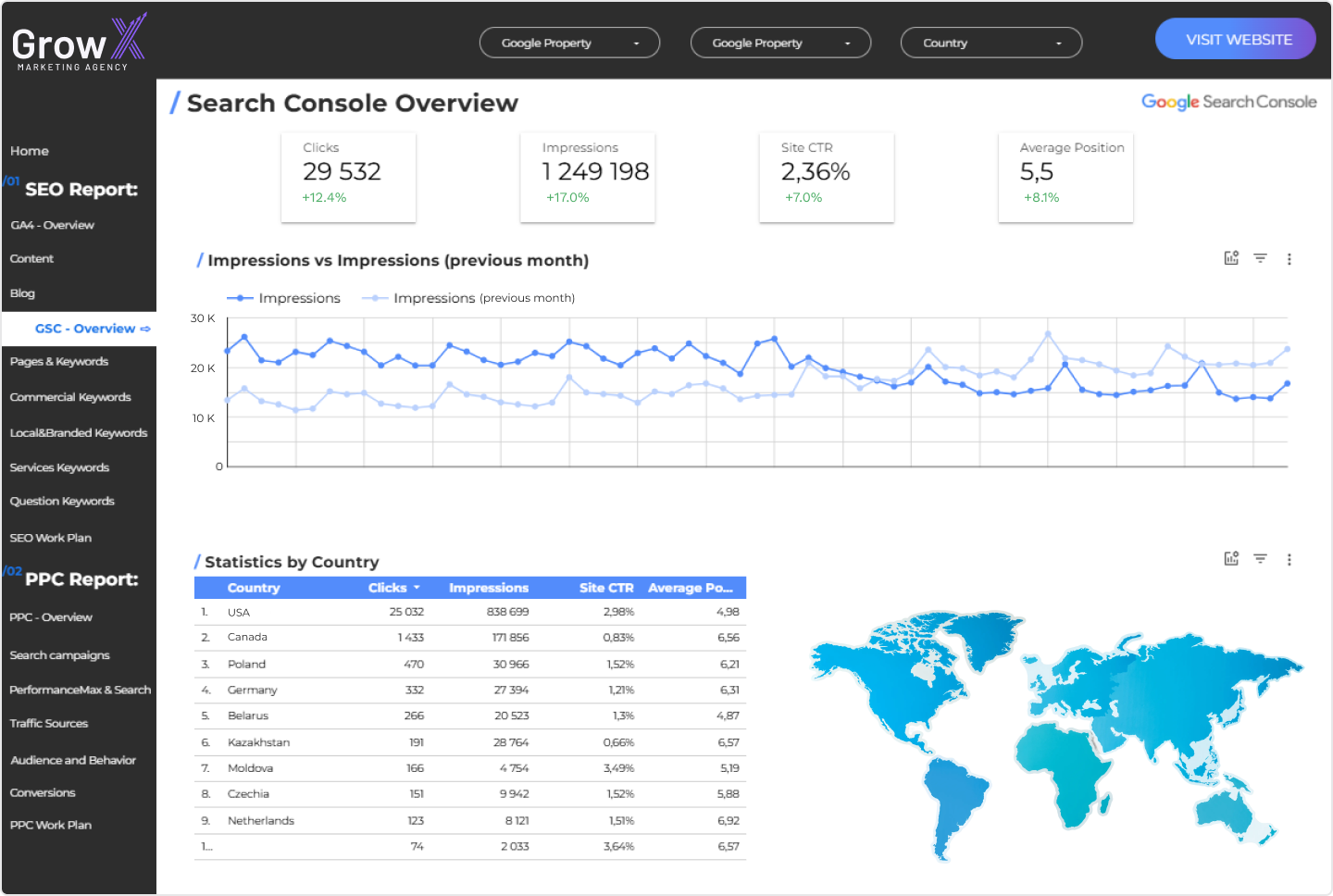
Google Search Console provides insights on impressions, clicks and position trends. Rising visibility and keyword coverage indicate growing trust from Google, helping you spot momentum early and adjust optimization efforts.

Clicks & impressions
Clicks represent real traffic. Impressions signal early growth before traffic arrives. When impressions rise steadily, Google is testing your pages across more search results. Tracking both helps you track organic expansion before revenue increases.
Average position (only when segmented)
Average position is useful only when segmented by page, query, device or country. A site-wide average often hides reality. Segmented analysis reveals whether your optimization efforts in specific categories or landing pages are working.
Organic click-through rate
Click-through rate tells you whether your snippet earns the click. Even small improvements in titles and meta descriptions can increase traffic without ranking changes. CTR is one of the top SEO metrics because it measures how well your listing competes visually and psychologically in search results.
Keyword growth
Keyword growth shows how many queries your site ranks for. This indicates whether Google is expanding your visibility footprint. For newer domains, this metric proves that technical SEO and content strategy are helping Google understand your authority.
The 3 traffic quality metrics that separate good SEO from just traffic
Traffic volume alone does not prove success. Business growth requires qualified visitors who match search intent and are likely to convert. Without measuring quality, rising numbers can create a false sense of progress.
Partnering with our growth marketing experts ensures your traffic translates into meaningful business results.

Organic sessions & users
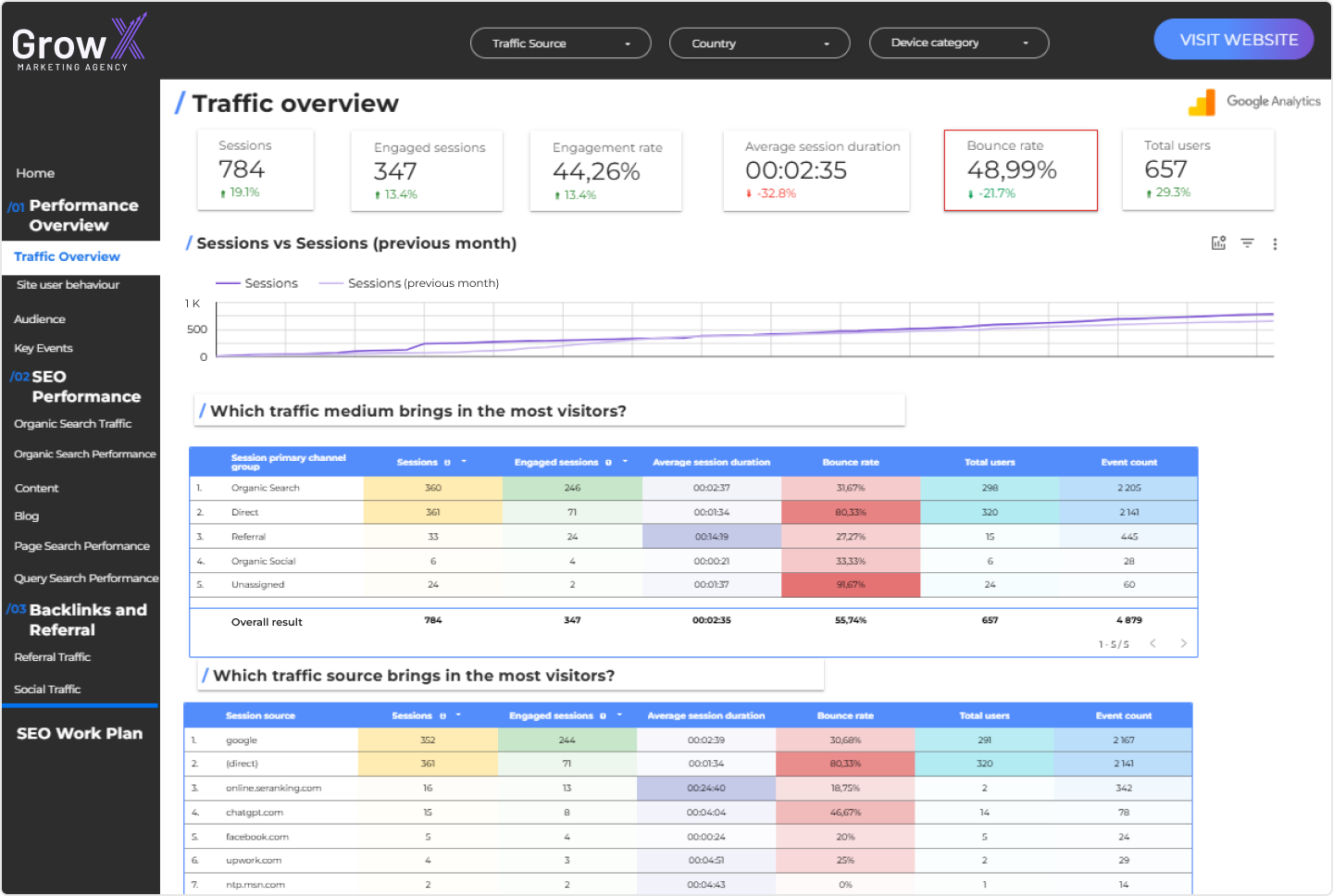
Sessions show volume. Users show audience growth. Comparing month-over-month trends in Google analytics reveals whether your visibility gains translate into real audience expansion.
Engaged sessions & engagement rate
These are the most important engagement metrics for SEO. They measure whether users interact meaningfully with your site. High sessions with low engagement signal weak intent matching. High engagement confirms your content strategy aligns with demand.
New vs returning users
SEO should drive discovery. A strong share of new users indicates growing reach. Returning users reflect brand strength and content loyalty. Balanced growth between both segments improves long-term performance.
The 2 business metrics that justify SEO budget
These are the only metrics executives truly care about. While SEO reports often include dozens of indicators, leadership focuses on revenue impact and return on investment.

Conversions / Key events from organic
Without tracking conversions, SEO is just guessing. For service sites, this means measuring form submissions or booked calls. For ecommerce, it’s tracking purchases. Conversions show whether your organic traffic actually supports real business goals.
Revenue from organic or leads
For online stores, revenue from organic traffic is direct proof of ROI. For service businesses, track leads and their close rate. These are the SEO metrics to measure SEO performance at a strategic level.
The 2 metrics that tell you what to fix next
Some metrics don’t just measure performance - they show where to take action. They highlight top pages and queries driving traffic, conversions or engagement, helping identify content gaps and underperforming pages.
Regularly tracking these metrics creates a clear roadmap for the next month’s SEO work, eliminating guesswork.

Top landing pages
Landing pages are your real SEO entry points. Optimizing top pages often delivers the fastest ROI. Analyzing their conversion and engagement data helps prioritize improvements.
Top queries
Queries show real customer demand. They reveal content gaps and new topic opportunities. Combining query data with ranking and CTR allows you to track and analyze what Google rewards.

Why we track everything in Looker Studio
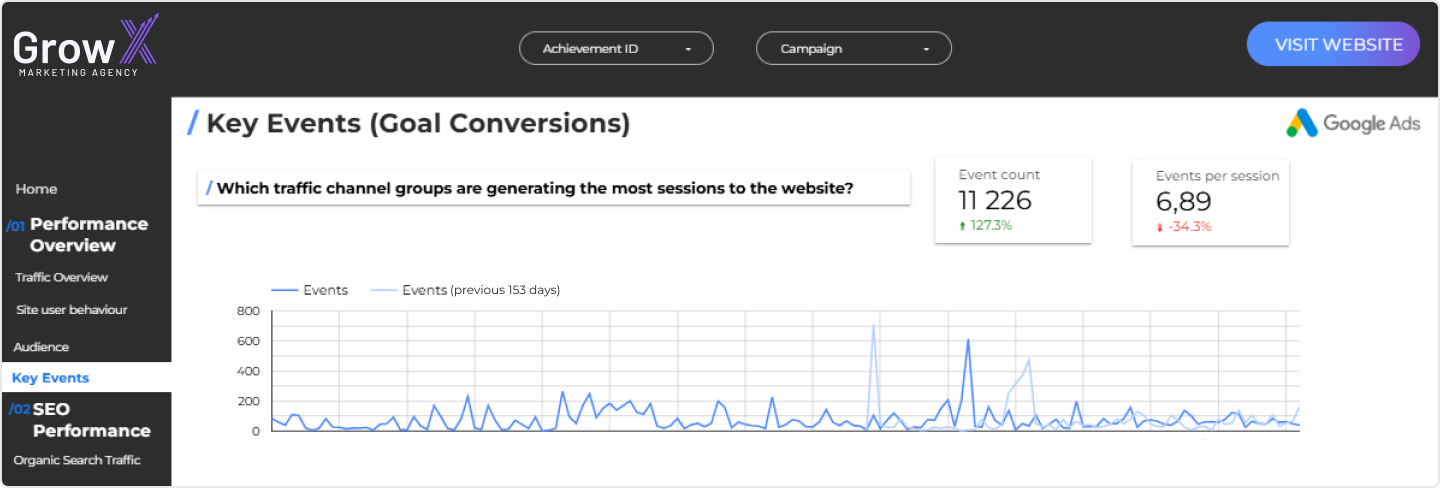
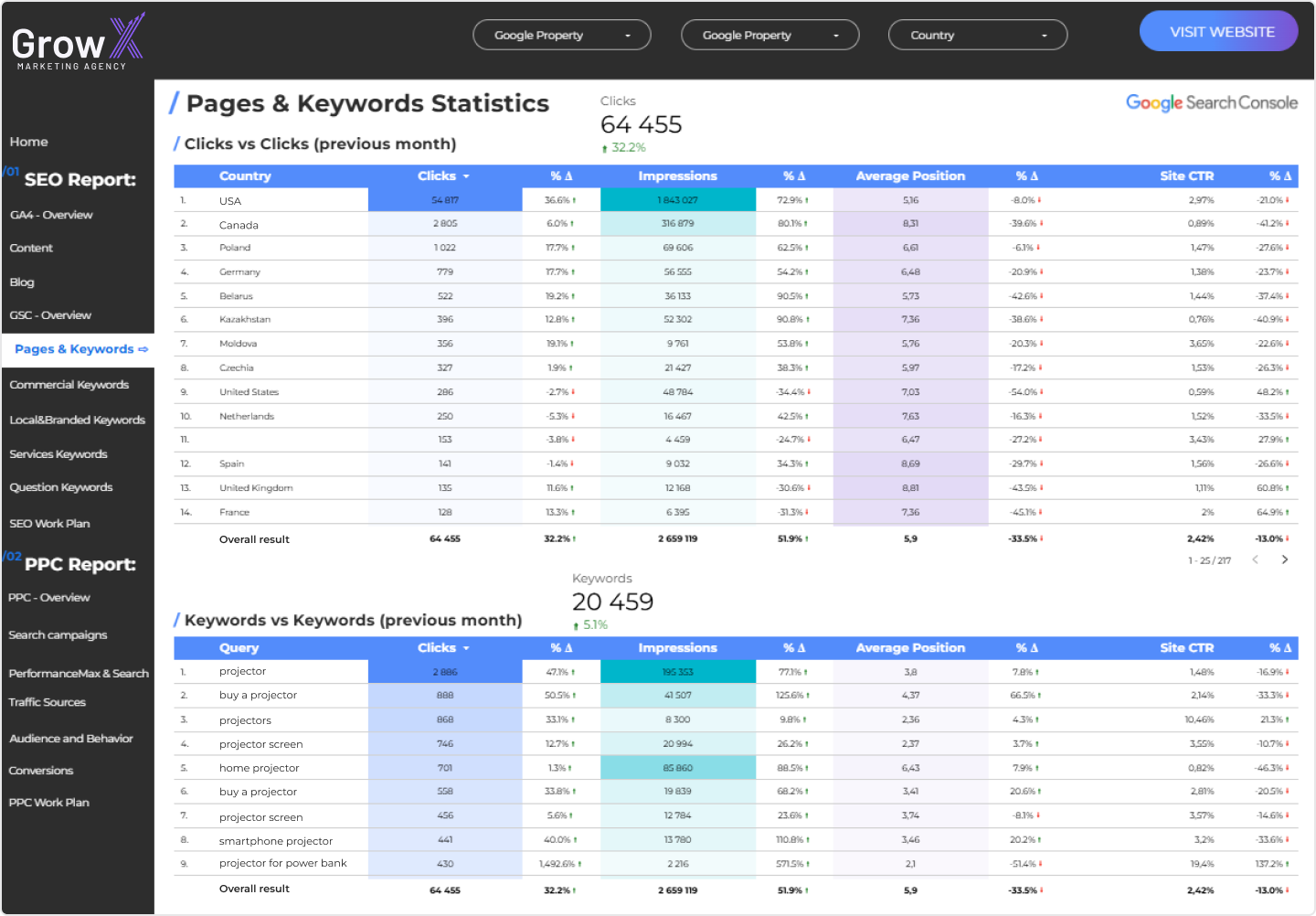
SEO is easier to manage when all data is in one place. A centralized dashboard combines GA4, Search Console and other metrics, making it simple to track traffic, keywords, engagement and conversions.
Filters and segments allow quick analysis by device, location or source, turning reports into actionable insights instead of just numbers.
One dashboard = one source of truth
We combine GA4 and GSC into a single dashboard. This eliminates fragmented reports and ensures clarity. Leadership sees traffic, engagement, revenue and visibility in one view.
Filters that make reports useful
Filters for date range, device, country and traffic channel make SEO reports truly actionable. Without segmentation, dashboards often show raw numbers that are hard to interpret, making it difficult to identify real trends or issues.
By applying filters, you can isolate performance by desktop vs mobile, organic vs referral or by region. This helps you see which audiences, pages or campaigns are driving results and where optimization is needed.

Want this dashboard? Here’s how Grow X helps
Grow X builds reporting systems that focus on SEO metrics that matter, not vanity charts. We create dashboards that combine visibility, traffic quality, engagement and conversion metrics in a single, easy-to-read view.
Option 1 - One-time Looker Studio setup
We are a marketing company who design a custom dashboard with KPIs, filters and business metrics tailored to your company. This setup includes performance benchmarks, keyword visibility tracking and conversion insights. Once configured, it provides a complete picture of your SEO health in one place.
Option 2 - Monthly SEO reporting
Our monthly reporting service combines independent analysis, actionable insights and optimization recommendations. For enterprise teams, this approach ensures unbiased evaluation of SEO performance and helps plan data-driven strategies. Monthly reports highlight growth trends, identify issues and provide a clear roadmap for the next steps.

The executive summary
For leadership, SEO reports need to be clear, concise and focused on metrics that show real business impact. Instead of overwhelming charts and numbers, executives want to see whether SEO drives revenue, attracts the right audience and supports long-term growth.
If you need marketing advice, our expert guidance can help translate data into actionable strategy.
5 SEO metrics worth reporting to leadership
- Organic revenue or leads - proves SEO drives business value;
- Conversions from organic - shows traffic quality;
- Organic click-through rate - measures snippet effectiveness;
- Engaged sessions - confirms visitor intent alignment;
- Keyword growth & visibility trend - indicates long-term scalability.
Grow X tracks all these metrics in Looker Studio and can set up a dashboard or provide independent monthly reporting.

Yes. Consistent visibility in search results strengthens brand recall and authority. Over time, this increases trust and direct traffic.
They connect visibility with revenue. Without them, SEO becomes a reporting exercise instead of a growth strategy.
Monitor page speed, crawl errors, backlink quality and technical SEO health. These support stable performance.
Connect GA4 and GSC data sources, define KPIs, apply filters and design visual comparisons. The goal is clarity, not complexity.
Yes. Independent reporting reduces bias, improves accountability and supports strategic decision-making at scale.