SEO Metrics That Actually Matter (and What Most Reports Completely Miss)
Most SEO reports look impressive but don’t help leaders make decisions. They list rankings, sessions and charts without explaining what actually drives revenue.
What you’ll learn in this article:
For business leaders, the discussion around this topic is not about tactics. It is about strategic allocation of budget, risk management and long-term market positioning.
SEO builds authority, strengthens organic search results, and supports sustainable growth in search engines like Google. Good internet ads deliver speed, controlled visibility in each search result and measurable lead generation.
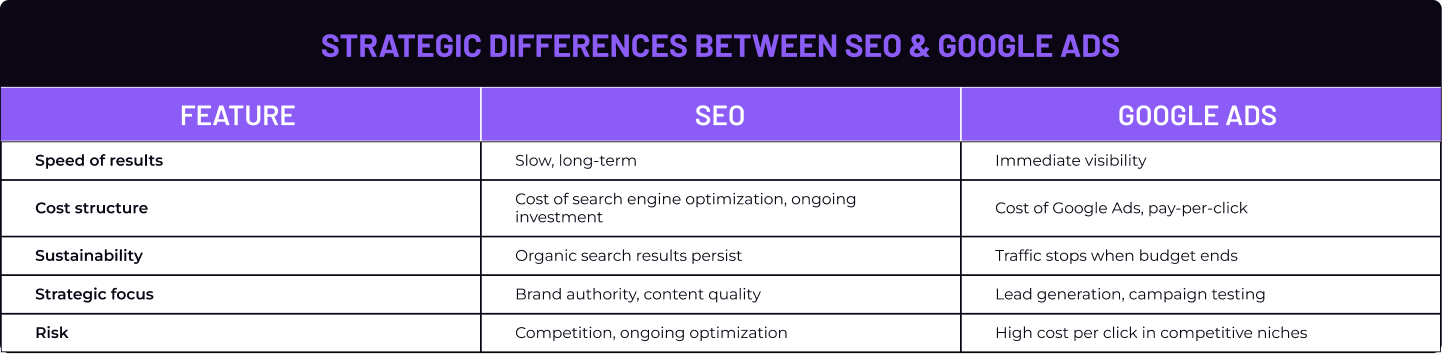
SEO vs Google Ads often sparks debate, but the strategic logic behind each is different. SEO builds sustainable, organic presence in search engines, while Google Ads accelerates visibility and controls traffic through paid placement.
It focuses on optimizing websites for search engines, targeting relevant keywords, long-tail keywords and search intent. Benefits of search engine optimization for business include compounding visibility, authority building and lower reliance on paid spend over time. Investing in this area allows leaders to scale traffic and maintain organic search results, providing a long-term competitive advantage.
Google Ads can help brands achieve immediate visibility and test campaigns quickly. With proper targeting and CPC management, Google Ads benefits businesses looking to generate leads fast. Ads allow for geo-targeting, audience segmentation and instant feedback on messaging and demand.
Organic SEO and Google Ads reach audiences differently. Organic search results build credibility and authority, while paid ads offer control and speed. Businesses that choose the right mix benefit from both short-term gains and long-term growth. This integration ensures coverage across the buying funnel.
The strongest growth models are not built on isolated channels. Integrating SEO and Google Ads allows businesses to capture demand at different stages of the funnel while balancing speed and sustainability.
When aligned strategically, SEO strengthens long-term authority and reduces acquisition costs, while paid campaigns accelerate data collection and revenue generation. This combined approach transforms separate activities into a coordinated growth engine.
SEO positions a website as a trusted resource. Optimized pages, technical SEO and high-quality content create a sustainable presence. Even with reduced activity, organic search results maintain a baseline of traffic. Long-term strategy strengthens brand credibility and reduces dependence on paid traffic.
Google Ads can target warm audiences and transactional queries, providing rapid lead generation. Campaigns can validate new products, test messaging or exploit seasonal demand. The cost of Google Ads is predictable per click, but traffic stops if spend ceases.
A professional marketing team often runs campaigns where Google Ads drives early traffic while SEO strengthens content for organic rankings. Combined efforts lower CPC, improve QS and create a multi-channel funnel. Online marketing portfolio examples show measurable ROI improvements when both channels work together.
This choice should never be emotional or trend-driven. It must reflect business maturity, revenue targets, competitive pressure and available budget.
For leadership teams, the real question is not in isolation, but which channel supports current objectives while protecting long-term growth. Strategic clarity prevents wasted spend and fragmented digital marketing strategies.
Invest in SEO when your objective is durable market positioning rather than short-term traffic spikes. A well-executed strategy strengthens visibility in search engines and builds consistent organic search results that continue generating leads without continuous ad spend.
The benefits of search engine optimization for business extend beyond traffic. It builds competitive barriers, strengthens brand credibility, and reduces dependency on fluctuating cost per click models. It is a long-term strategy that compounds in value as content, technical optimization, and authority signals grow.
Google Ads delivers immediate traffic, fast demand validation and short-term campaign results. It allows testing products, markets and messaging within weeks. Costs must be monitored carefully, as traffic stops without spending, and high CPC in competitive niches can impact margins if not balanced with SEO.
Business leaders must assess cost per click, competition and resources. SEO works best as a foundation, while Google Ads complements by capturing high-intent, ready-to-convert visitors. Both together create a more resilient marketing system.
Paid advertising delivers speed and control, but SEO builds structural advantage. For business leaders, the difference is strategic resilience. Advertising creates visibility as long as budgets flow. SEO builds an asset that continues to generate value within search engines over time.
Unlike Google Ads, which stops delivering traffic when the budget ends, SEO maintains rankings and visibility. Investing in search engine optimization builds equity that competitors cannot replicate quickly.
Effectiveness requires consistent content creation, technical optimization and search result monitoring. High-quality website content copywriting ensures pages meet user intent and sustain engagement over time.
Search engines reward trusted, relevant websites. By creating optimized content, internal linking and topic authority, businesses position themselves as industry leaders, gaining competitive advantage beyond immediate conversions.
Choosing the right digital marketing channels requires understanding how each contributes to business objectives. SEO and Google Ads serve different purposes, but together they form a complementary system that maximizes growth. For guidance, consult a digital marketing expert near you.
Long-term growth requires SEO as the foundation, while Google Ads delivers rapid results and campaign insights. Businesses that align goals with channel capabilities achieve maximum efficiency.
A strong strategy goes beyond driving traffic - it builds competitive barriers and strengthens brand authority. Optimized content, structured internal linking and topic relevance help maintain top search result positions. Even with moderate ongoing effort, robust SEO retains rankings, sustains organic traffic and reduces dependence on paid advertising, creating long-term value for the business.
Paid campaigns support testing, seasonal promotions, and urgent demand fulfillment. When combined with SEO, businesses close the funnel across multiple touchpoints, reduce CPC, and improve overall ROI.

Neither alone is sufficient. SEO builds long-term authority and sustainability, while Google Ads accelerates visibility and lead generation. The optimal strategy combines both.
SEO requires upfront investment in tools, content and experts. Costs compound over time but deliver durable results. Google Ads cost is variable per click and traffic stops if spend ceases.
Yes. Combined campaigns optimize content, reduce CPC, improve quality scores and capture both immediate and long-term market opportunities. Multi-channel integration maximizes business growth.