SEO Metrics That Actually Matter (and What Most Reports Completely Miss)
Most SEO reports look impressive but don’t help leaders make decisions. They list rankings, sessions and charts without explaining what actually drives revenue.
Many ask: how much does SEO cost and why does the average cost of SEO services vary so much?
The truth is simple. You’re not just paying for a special service. You are paying for strategy, expertise and long-term growth. And that’s why Google search engine optimization prices can look very different from one project to another.
In this expert breakdown, we explain what pricing really means, what affects it and how to choose the right option without overpaying.
Key takeaways:
SEO pricing often feels confusing because there’s no universal “price list.” It’s not a standard service you can package the same way every time. The cost depends on your business, your market and what you’re trying to achieve.
Two companies can ask for a website and get completely different quotes and both can be justified. The difference is in the amount of work needed to actually get results.

There’s no fixed average price for SEO because every case is unique. The main things that impact cost are:
Even the same search query can cost differently depending on the industry.
Cheap SEO can look like an easy win, especially at the start. But in most cases, it comes with hidden compromises that show up later.
Low pricing often means shortcuts - weak strategy, generic content or automated tactics that don’t really work long term. At best, you get no results. At worst, your rankings drop and fixing it costs more than doing it right from the beginning.
The reality is simple: SEO takes time, expertise and proper tools. That’s why it isn’t cheap. You’re paying for consistent work, analysis and improvements that actually move your business forward.
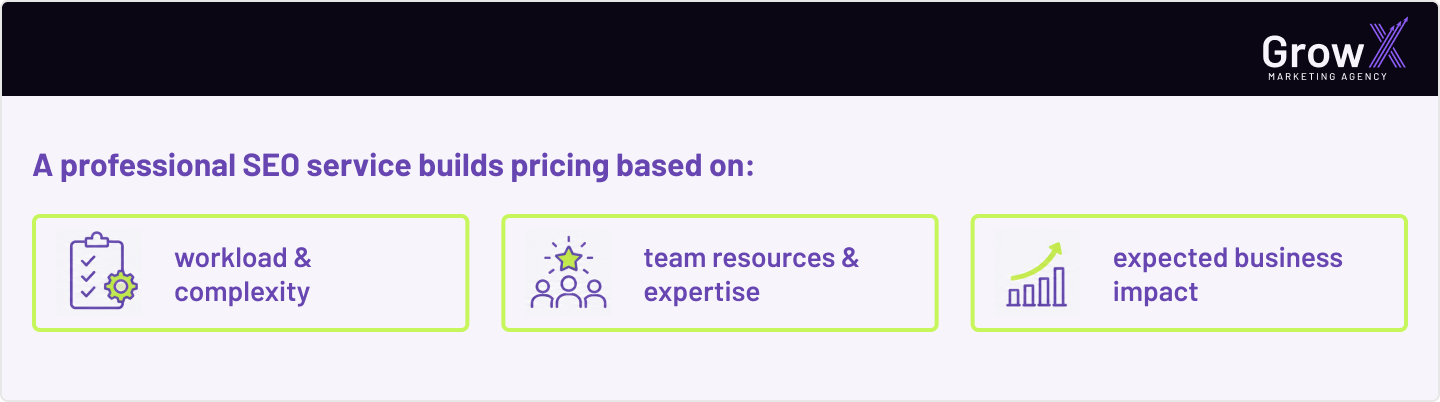
You’re not paying for tasks. You are paying for outcomes. Transparent agencies explain exactly what will be done and why.
SEO pricing isn’t universal because businesses are different. What works for one company may not fit another. The key is not to find the cheapest option, but the one that actually supports your goals and timeline.
In practice, most SEO work follows a few clear models.
The most common is a monthly retainer, where a team works on your SEO continuously - improving, testing and scaling results over time. This is usually the best option if you’re aiming for steady growth.
Then there’s project-based pricing. This is used for specific tasks - like audits, technical fixes or content improvements - with a clear scope and timeline. It works well when you need to fix something or build a foundation.
Some businesses combine both approaches, using ongoing support with additional one-time projects when needed.
In simple terms: retainers help you grow, while project-based work helps you fix or set things up.
Performance-based SEO often sounds like the safest option - you pay only for results. But in reality, it’s not always the best fit.
This model can push providers to focus on quick wins instead of long-term growth. For example, chasing easy keywords or short-term rankings that don’t bring real business value.
Strong agencies think differently. They focus on impact, not shortcuts. Rankings alone don’t matter if they don’t lead to traffic, conversions and revenue. The real goal is growth that actually affects your business, not just positions in search.
If you need steady growth, go with a retainer. If you need fixes or a strategy, choose a project-based approach.
You can explore tailored digital marketing services that align pricing with business outcomes.

Many businesses think it is just about content or rankings. In reality, it’s a system where everything is connected. Results come not from one action, but from how strategy, execution and ongoing improvements work together.
Once you understand what’s behind the process, SEO pricing starts to make more sense - it reflects the effort needed to build something that actually works.
Most clients assume they’re paying for content. But the real value is in the foundation behind it.
You’re investing in:
Without this base, even well-written content won’t deliver results.
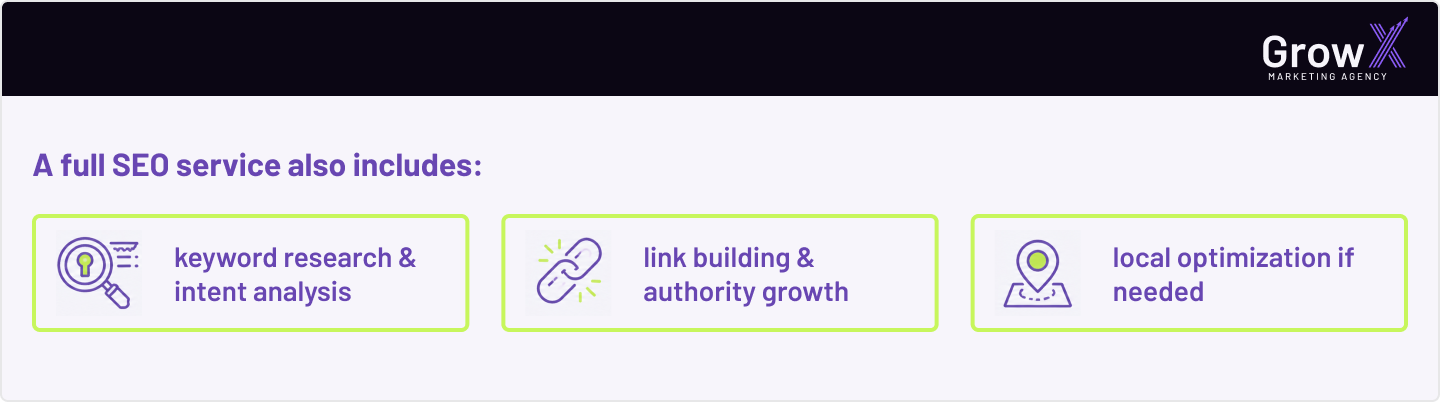
Good SEO isn’t judged only by rankings. Positions in search are just one part of the picture, not the final goal.
Reliable agencies focus on real business outcomes. They track:
Choosing the wrong partner can cost more than budget. It can slow down growth or even negatively affect your rankings.
A transparent process and realistic expectations help you avoid risky decisions and choose a provider that actually delivers value.
Low-cost SEO can look appealing at first, but it often hides shortcuts instead of real strategy. Over time, this leads to unstable results and wasted investment.
Warning signs include:

SEO involves more than visible tasks. Tools, analytics and expert work all affect cost. That’s why pricing reflects not just actions, but the system behind them.
If you want clarity, you can get a free price quote and understand what fits your case.
SEO delivers the best results when you treat it as a long-term investment, not a quick expense. The goal isn’t simply to spend less, but to invest smarter - in actions that consistently drive traffic, growth and revenue over time.
When pricing is clearly connected to strategy, it becomes easier to make better decisions and avoid wasting budget on low-impact activities.
Small businesses don’t need large budgets to see real results. What matters most is focus and clear priorities.
Start with what brings the biggest impact. Instead of trying to do everything at once, focus on key improvements like fixing technical issues, optimizing important pages or strengthening core content. These changes often deliver stronger results than spreading efforts too thin.
Even a limited budget can work effectively when the strategy is realistic, structured and aligned with actual business goals - not random tasks.
The best model is the one aligned with your goals and resources. Avoid choosing based on price alone. Focus on expected results and long-term value.
A strong structured marketing approach ensures your SEO investment supports real growth.

SEO starts working when pricing, strategy and execution are aligned into one system. If these parts are disconnected, even a well-funded campaign can underperform.
Instead of focusing only on how much it costs, it’s more useful to ask what outcomes it can realistically deliver for your business. This shift helps you evaluate value more clearly and make decisions based on impact, not just price.

SEO pricing depends on project complexity, competition and scope. Agencies calculate costs based on required work, expertise and expected results.
The average cost of services varies widely. Small projects may cost hundreds, while competitive markets require larger monthly investments.
Yes, if the focus is on strategy and results. A good investment brings long-term traffic, leads and revenue, making it a valuable growth channel.