How to choose business blog topics that can rank & drive traffic
Choosing the right blog topic isn’t about copying competitors - it’s about building authority that supports real business goals and drives traffic.

This type of audits in 2026 have become a strategic tool for improving visibility, authority and business performance. Instead of focusing on publishing more information, brands increasingly use special audit SEO processes to update, improve and consolidate existing assets.
With the growth of Google’s AI overviews and stronger competition in search, regular theme reviews help improve SEO performance, strengthen expertise signals and maintain visibility in AI answers.
If you want a structured audit, explore our digital content marketing audit services.
What you'll learn in this article:
This has shifted from periodic reviews to ongoing growth initiatives. One of the biggest 2026 marketing trends is investing in existing assets instead of constantly creating new pages.
Many companies now realize that publishing more content does not automatically create better results. Updating existing pages often produces faster gains than launching new articles from scratch.
A modern theme audit helps diagnose outdated information, weak engagement signals, declining rankings and gaps. By improving proven assets, brands can generate stronger results with fewer resources.
Search engines increasingly evaluate expertise at the topic level rather than judging individual pages in isolation.
Websites with fewer but deeper resources often outperform larger sites filled with thin or repetitive content. This shift encourages brands to focus on authority, depth and subject coverage instead of volume alone.
The strongest audit best practices now include evaluating topical coverage, internal connections and expertise signals across entire clusters.
Even well-written content can underperform if it no longer matches user intent. During a special review, teams evaluate whether pages align with informational, commercial or transactional goals. Pages that satisfy intent more effectively are more likely to earn higher positions, stronger engagement and better visibility in AI answers.
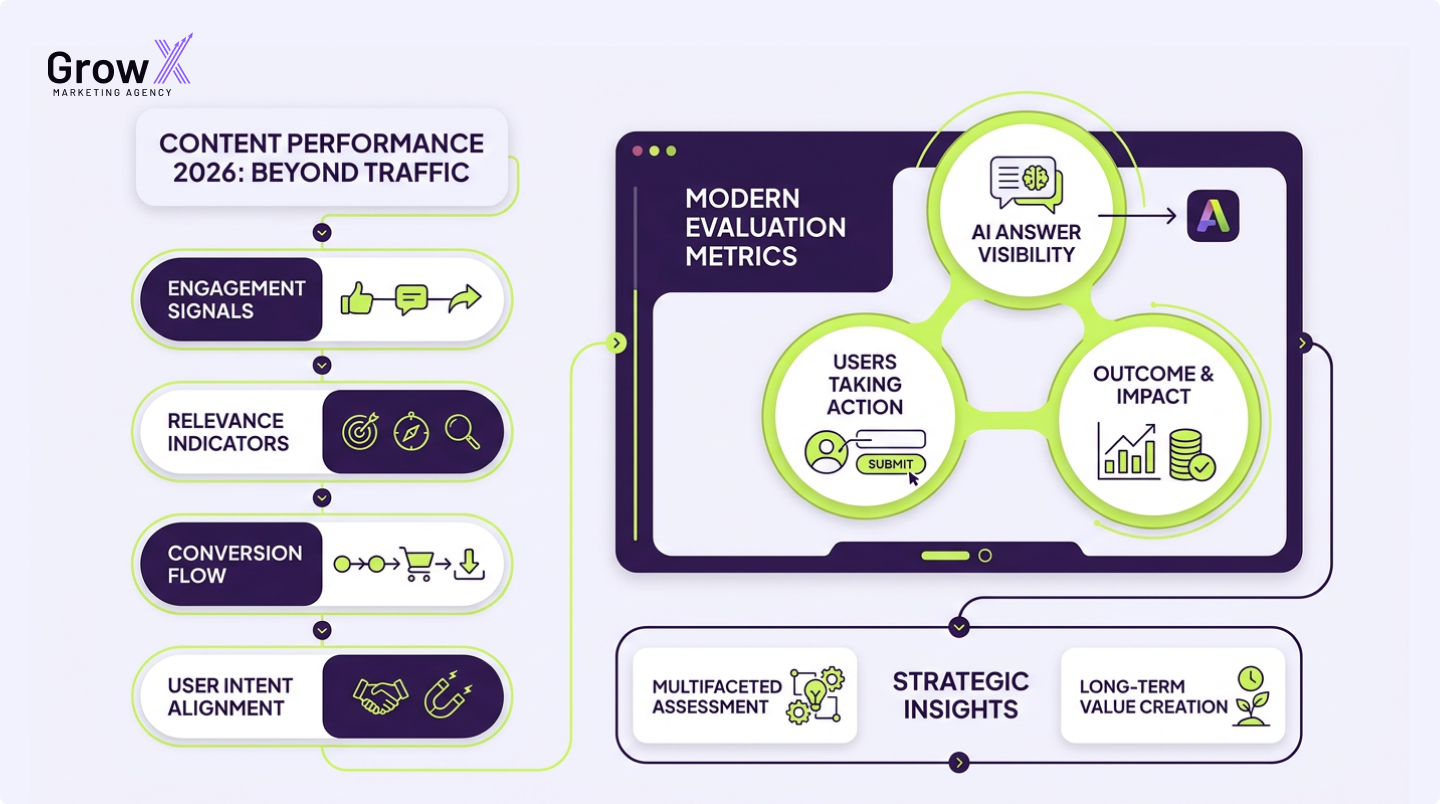
Theme performance is no longer measured by traffic alone. Modern audits also evaluate engagement, relevance, conversion potential and alignment with user intent.
In 2026, successful content is not just attracting visitors - it helps users find answers and take action. That’s why audit processes increasingly focus on both business outcomes and user needs, providing a more complete view of performance.
Modern audits evaluate how content contributes to business outcomes. Instead of focusing only on organic traffic, teams analyze:
A page that drives fewer visits but generates more qualified leads may provide greater value than a high-traffic article with poor engagement.
Naturally loses effectiveness over time.
Search behavior changes, competitors publish stronger resources and information becomes outdated. This type of audits help identify pages that have lost position, visibility or engagement and require updates.
This process also helps diagnose low-quality sections that weaken overall site authority.
The most effective updates are guided by data rather than assumptions.
Teams analyze search performance, keyword trends, user behavior and competitive gaps to determine where improvements will have the greatest impact. This allows brands to improve SEO efficiently while focusing on pages that influence revenue and conversions.
One of the biggest trend marketing shifts in 2026 is theme consolidation. Instead of constantly publishing new pages, brands are merging, updating and strengthening existing content to reduce duplication and improve topical authority.
An audit helps identify overlapping or outdated pages that can be combined into stronger resources. In many cases, fewer high-quality pages outperform large volumes of thin content and deliver better long-term SEO results.
AI-generated publishing has dramatically increased saturation.
As a result, many websites now contain overlapping articles, duplicated topics and competing pages. Consolidation helps remove duplication while strengthening the authority of core resources.
Combining related information into stronger assets often improves rankings and user experience.
Instead of spreading authority across multiple weak pages, brands create comprehensive resources that earn better engagement, stronger links and higher positions in search results.

This strategy also helps search engines better understand topical expertise.
Successful consolidation requires careful planning.
Best practices include:
When executed correctly, consolidation strengthens authority without sacrificing existing visibility.
Editorial standards continue rising as AI-generated content becomes more common. Today, successful brands focus on expertise, originality and real value rather than theme volume alone.
Search engines increasingly reward information that demonstrates experience, supports E-E-A-T principles and aligns with user intent. As a result, brands are investing more in expert-led content that builds authority, engagement and long-term SEO growth.
One of the biggest shifts in theme audit is moving away from pages built solely around keyword targeting.
Today, successful content demonstrates expertise, experience and credibility. Search engines increasingly reward information aligned with E-E-A-T principles and real-world knowledge.
Brands that rely on expert insights often outperform competitors producing generic content at scale.

A strong audit evaluates whether the selected type matches user expectations. Some queries require guides, others need comparison pages, case studies, videos or product-focused resources.
Format alignment often influences both engagement and conversion performance.
Publishing more frequently does not guarantee better outcomes. Consistent quality, reliable expertise and a recognizable editorial approach create stronger authority over time. This is especially important as AI-generated content makes differentiation more difficult.
They are becoming more closely connected to AI search and business outcomes. The goal is no longer just improving rankings or organic traffic, but also strengthening authority, trust and visibility.
Modern audit content processes help diagnose theme gaps, identify weak pages and prioritize updates. As search evolves, brands use these strategies to improve SEO and make smarter decisions aligned with business goals.
Future audits will focus heavily on how content supports both user needs and business objectives.
The goal is not simply earning a click but helping users complete meaningful actions after arriving on the page.
As Google’s AI overviews expand, brands must create content worthy of citation.
Pages that provide original insights, expert opinions and unique data are more likely to gain visibility in AI answers and industry discussions.
Audits increasingly evaluate local relevance, regional search behavior and opportunities to strengthen geographic visibility. This helps brands improve position across targeted markets while supporting broader authority goals.
Businesses working with a professional marketing team are often better positioned to adapt to these evolving standards.
Explore our content marketing blog for more insights or submit a request for a quote to strengthen your strategy in 2026.